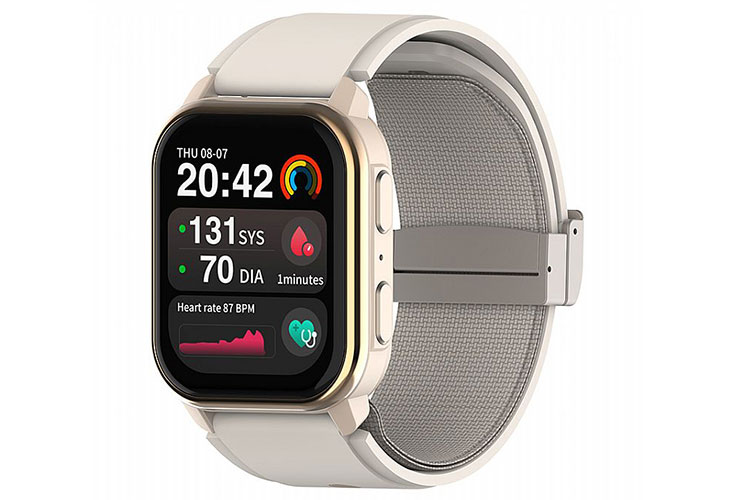
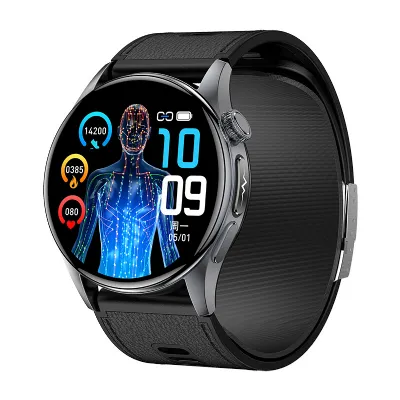
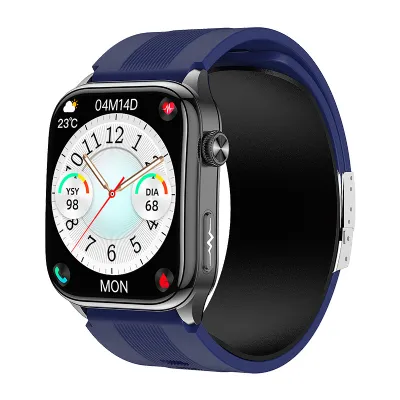
Wearables aren't replacing healthcare professionals. If anything, they're filling a gap that has always existed between appointments. A patient might spend a few minutes with a doctor, but the rest of their week happens elsewhere. Devices that can track health metrics continuously help provide some context for what happens during that time.
That's where much of the interest is coming from. Healthcare organizations want more than isolated data points collected during occasional visits. They're looking for a broader view of patient health over time. For many programs, the most effective approach combines wearable monitoring with clinical oversight rather than treating them as separate tracks.
Why Healthcare Organizations Are Choosing Wearable Health Devices
As healthcare providers shift their focus toward early intervention and remote patient monitoring, demand for smart wearables with biometric tracking and data integration is rising. This shift has changed what people in the healthcare industry are now looking for in wearable tech.
Instead of standard fitness bands, health organizations want devices that are specifically designed for heart monitoring, elderly care, sleep analysis, stress tracking, and managing chronic conditions. Features like ECG tracking, oxygen tracking, AI-driven insights, and cloud-based data syncing are becoming pretty much a standard requirement.
Healthcare providers are also starting to expect wearables that can connect with EHR systems, telemedicine platforms, and mobile health apps. What this means is that manufacturers who can provide software development kits, firmware customization, secure APIs, and data handling that is ready to be used by healthcare are going to be those that are best placed to land healthcare contracts.
As preventive healthcare adoption becomes a global phenomenon, Original Equipment Manufacturer (OEM) wearable manufacturers are transforming from hardware suppliers into long-term tech partners.
Best Features to Look for in OEM Wearable Health Devices
Demand for
wearable health devices from OEMs is growing as healthcare buyers look for more than just consumer fitness products. This shift has created a pressing need for OEMs that can purpose-build smart wearables with features that truly matter to healthcare customers, such as advanced health monitoring functionality.
These are the main features that healthcare providers now expect to see in a smart wearable device:
- ECG monitoring that actually works accurately.
- Blood oxygen tracking.
- Heart rate and heart rate variability tracking.
- Sleep and activity analysis.
- Secure cloud synchronization.
- API and SDK support.
- Compatibility with EHR and telemedicine platforms through personalization.
Building Connected Healthcare Ecosystems with Wearable Health Devices
Wearable health devices are no longer just fancy activity trackers that happen to track your heart rate. Through medical wearable tech, devices can collect a continuous stream of biometric data in real-time, like heart rhythm readings, blood oxygen levels, how well someone's sleeping, blood pressure patterns, and how active they're being. All that data then gets sent securely to the cloud via Bluetooth, Wi-Fi, or mobile signal, and then gets fed into central systems where clinicians can monitor patients remotely even when they're not at the clinic.
Rather than relying on periodic clinic visits, doctors can track long-term trends and intervene whenever patterns start to change, doctors can keep track of long-term trends and step in whenever patterns start to change for the worse.
Wearable IoT ecosystems are particularly effective in remote patient monitoring, elderly care, cardiac monitoring, diabetes management, and post-surgery recovery. As healthcare systems get more connected, OEM buyers are placing a lot more value on secure cloud integration, open SDKs, API connectivity, and compatibility with healthcare software platforms. It's no longer just about sensor accuracy and hardware quality, it's about software readiness, too.
From Hardware to Healthcare: OEM Wearable Device Integration for Digital Platforms
Most healthcare procurement decisions don't stop at the device. Clinics, telehealth platforms, and senior care operators are building connected ecosystems — and the wearable is just one component in a larger data flow. That's where OEM integration capability becomes the real differentiator.
What healthcare buyers are actually evaluating goes well beyond sensor accuracy. Open SDK access for custom app development, secure APIs for EHR and telemedicine connectivity, firmware customization for specific clinical workflows, and cloud-ready data architecture that meets healthcare data handling requirements — these are the things that determine whether a wearable actually fits into an existing system or just sits alongside it collecting data nobody can easily access.
A device that tracks ECG accurately but can't pipe that data into an existing platform isn't much use to a digital health operator. The hardware is the starting point, not the finish line. Data connectivity also varies by product type —
4G health watches integrate via protocol, while Bluetooth health wearables connect through an SDK. Understanding which model fits your platform architecture is an important part of the sourcing conversation.
For OEM and ODM buyers, this means the sourcing conversation needs to happen at two levels simultaneously — hardware specs and software readiness. Manufacturers that offer dual-chip architectures separating wireless connectivity from biometric sensing, open-source SDKs, and secure, healthcare-ready data handling are increasingly the ones winning healthcare contracts.
Frequently Asked Questions About OEM Wearable Health Devices
Can wearable health devices connect directly to hospital or EHR software?
Yes, OEM manufacturers can customize the data output and connectivity layer to work with EHR systems, telemedicine platforms, or hospital management software. The key is finding a manufacturer that offers open SDK access and secure API support from the start.
What biometric data can OEM wearable health devices track?
Depending on the hardware configuration, devices can track ECG, heart rate, HRV, SpO2, blood pressure trends, sleep stages, activity levels, and skin temperature. More advanced models support continuous monitoring with cloud sync.
Can OEM wearables be customized for specific healthcare use cases?
Yes. Both hardware and firmware can be adapted for remote patient monitoring, elderly care, chronic disease management, post-surgery recovery, and other clinical applications. The level of customization depends on order volume and development requirements.
How long does it take to go from sample to mass production?
It varies by project, but a typical OEM development cycle—from sample approval through to mass production—typically runs between 1 and 3 weeks depending on customization scope and certification requirements.
Do wearable health devices work with telemedicine platforms?
Yes. Wearable data can be routed to telemedicine tools so clinicians can review patient information remotely. Integration typically requires API connectivity and depends on the platform's data ingestion capabilities.