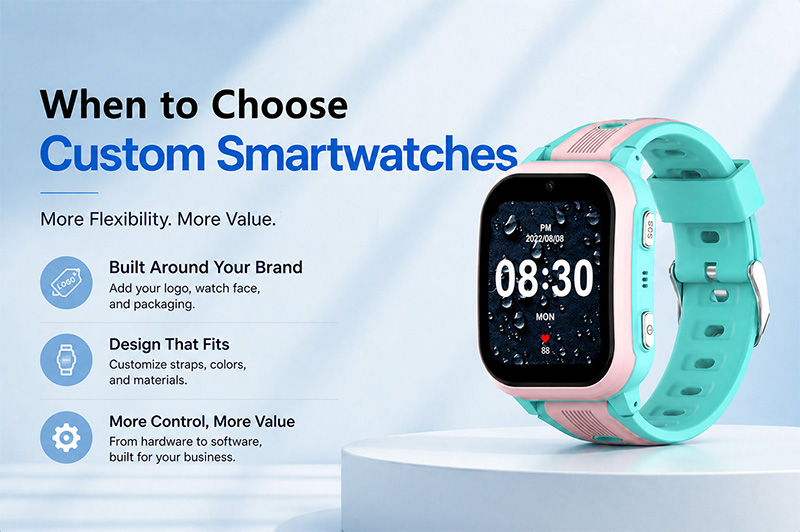
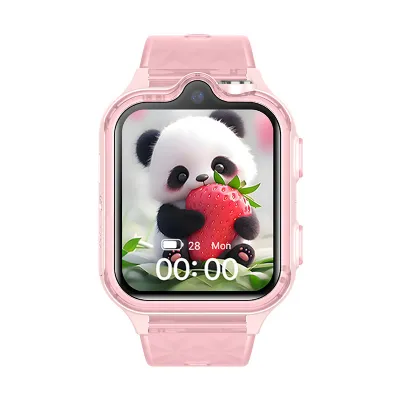
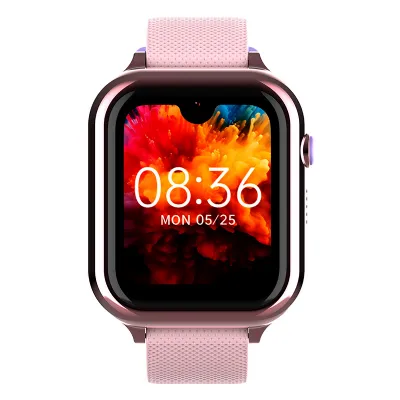
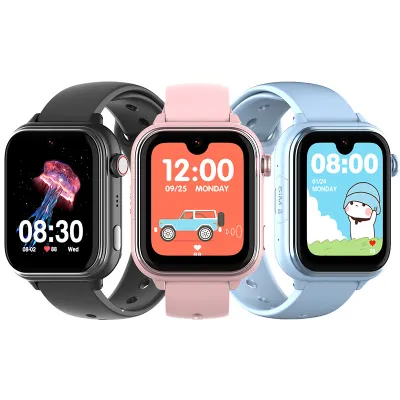
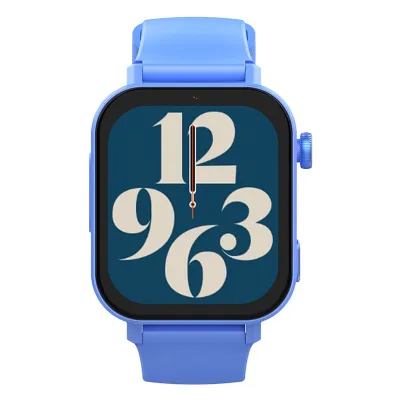
Below, you'll find the key scenarios where custom smartwatches provide a clear advantage — and when moving beyond standard models becomes a strategic choice. But first, it helps to understand where standard models fall short and why those limitations matter.
Where Standard Smartwatches Fall Short for Growing Brands
Standard smartwatches are a good starting point for new brands, but they often become a limitation once a company starts growing. As competition increases, the gaps in what standard models can deliver become harder to ignore. Here's where they consistently fall short:
- Lack of brand differentiation
Many off-the-shelf smartwatches are built on shared hardware platforms and similar industrial designs, making products from different brands look alike. As a result, customers may find it difficult to distinguish your products from competing models, limiting your ability to build a distinctive brand identity.
- Limited features for specific market segments
Standard smartwatches are generally designed for mainstream users, focusing on features such as fitness tracking, notifications, and everyday health monitoring. However, these general-purpose features may not fully address the requirements of specialized segments such as senior care and children's safety.
- Inconsistent software experience
Many standard white-label smartwatches come with generic software platforms that offer limited customization for individual brands. The companion app, interface design, and navigation flow are built for general use — not tailored to your product positioning. When the hardware and software feel mismatched, it creates an inconsistent user experience and weakens the overall product impression.
- Pressure on Profit Margins
Standard off-the-shelf models are often available to multiple brands with similar specifications. When buyers can easily compare identical products across multiple suppliers, the pressure to lower prices falls directly on brands — squeezing margins and limiting room for growth.
When Custom Wearable Devices Become the Smarter Investment
Custom wearable devices become the smarter investment when brands need product differentiation, market-specific features, or future expansion that standard models are not designed to support. Here are the key scenarios where custom wearables make more sense:
- You are targeting niche markets with specific feature and design needs
Custom wearable devices allow brands to build products around specific user groups rather than adapting a generic device to fit. For brands targeting senior care, pediatric safety, or women's health, this distinction matters. For example, senior care devices often require features such as automated fall detection, direct SOS calling buttons, and non-invasive blood pressure tracking. Children's watches need rugged casings, Geo-fencing alerts, and safe 4G video calling features. Women's health watches may require personalized biometric tracking and cycle-related insights. These capabilities cannot always be added to a generic device later; they often need to be considered from the initial product design stage.
- Your brand requires greater control over user data
Custom wearable development gives brands direct control over how user data is collected, stored, and managed. Through tailored software solutions, API connections, and custom data management systems, brands can define their own data ecosystems rather than relying on predefined third-party cloud platforms.
In some cases, customization is not optional — it is a regulatory requirement. In European countries, businesses operate under strict GDPR privacy laws. Standard consumer smartwatches transmit employee biometric data directly to third-party cloud servers, which can violate these agreements. For brands sourcing smart wearables for the European market, customization is the only compliant path forward.
- Your product roadmap includes long-term expansion and ongoing product iterations
Custom smartwatches offer greater lifecycle control than standard models. Through long-term component planning and supplier coordination, OEM manufacturers can support extended product lifecycles — providing the supply stability enterprises need to scale deployments without frequent component changes or supply interruptions. Standard models, by contrast, are typically retired every 12 to 18 months to drive consumer upgrades, which can disrupt enterprise software deployments built around specific hardware.
- Your brand needs a unique industrial design beyond standard models
Custom smartwatch gives brands greater flexibility in casing, screen size, form factor, and materials — elements that standard models lock in by default. Whether that means a circular design for a fitness line, a compact and durable casing for children, or a lightweight form factor for senior users, custom manufacturing makes it possible to build a product identity that standard models simply cannot provide.
Beyond physical form, standard models also have functional limitations in specific environments. For example, in cold-climate countries or during wintertime, people tend to wear insulated thermal gloves. Standard smartwatch touchscreens do not register touch inputs through gloves — a real limitation for brands targeting cold-climate markets or outdoor winter use cases.
How to Know When Your Brand Needs Custom Wearable Devices
Not every brand needs to start with custom wearables, and not every product requires full customization. However, there are clear signs that a custom wearable approach may be the right choice. If several of the following apply to your business, it may be time to explore a custom solution.
- Your products need to stand out beyond price competition.
- Your order volume is high enough for the benefits of customization to outweigh the additional costs.
- Your customers are asking for features that standard models cannot provide.
- Your brand requires a unique user experience or a stronger product identity.
Choosing the Right Strategy for Long-Term Brand Growth
Your brand stage should guide your sourcing strategy. Startups often benefit from standard models or light customization, growing brands usually need ODM customization, and established brands may move toward full OEM/ODM development. The table below offers a simplified framework to help you identify the right starting point:
| Business Stage |
Recommended Approach |
Key Benefit |
| Startup |
Standard models or light customization |
Faster launch and lower initial investment |
| Early growth |
ODM customization |
More flexibility while controlling development costs |
| Established brand |
Full OEM/ODM development |
Stronger differentiation and product ownership |
Your final selection depends largely on your current business stage, available engineering budget, product roadmap, and long-term brand objectives.
FAQs About Standard and Custom Smartwatches
Are Standard Smartwatches a Good Starting Point for New Brands?
Yes, standard smartwatches serve as an excellent starting point for brands entering the wearable market. These pre-designed models allow immediate retail sourcing without any upfront Non-Recurring Engineering (NRE) expenses. This baseline model preserves vital start-up capital during the initial product launch phase.
When Does It Make Sense to Move From Standard to Custom Smartwatches?
Brands should consider moving to custom smartwatches when standard models restrict design flexibility, provide insufficient control over user data, or cannot meet the needs of specialized markets.
A brand may require custom wearable electronics when its target market demands specialized technical capabilities. For example, a senior care platform may need health monitoring features such as ECG measurement, blood pressure tracking, and reliable fall detection. Similarly, a child safety solution may require hardware-integrated SOS buttons, customized firmware, and a companion application tailored to its requirements. Custom hardware and software design help overcome the limitations of standard wearable platforms.
How Much Does A Custom Smartwatch Cost Compared to A Standard Model?
The cost difference depends on the level of customization required. Standard models typically involve lower upfront investment and faster time to market. For custom wearable development, costs vary based on hardware modifications, firmware development, app integration, and order volume.
At Wonlex, custom smartwatches typically range from USD 20 to 88 per unit, with an MOQ of 100 pieces; final pricing will be adjusted based on specific project specifications, and NRE cost for firmware customization will be charged.
Can I Start with a Standard Smartwatch and Customize It Later?
Yes, many brands start with standard off-the-shelf models to test market demand, reduce initial investment, and move toward customization as their product requirements and sales volume grow.
At Wonlex, we support phased product development through two approaches:
✔ Software-only customization (without hardware changes)
- The base hardware unit price remains unchanged, with only a one-time software customization fee applied
- MOQ: 100 pcs
- Reference standard sample price range:
- Kids smartwatches: USD 20–45 per sample
- 4G senior smartwatches: USD 25–88 per sample
- Bluetooth health watches/bracelets/smart rings: USD 20–50 per sample
✔ Hardware customization (including structural design, circuit changes, sensor integration, etc.)
- Generally available when stable order volume reaches over 3,000 units per batch, depending on customization requirements
What Should Brands Consider Before Choosing a Custom Smartwatch?
Before investing in custom smartwatch development, brands should evaluate product goals, target market, budget, and expected production volume.
Start by understanding MOQ requirements and upfront costs. Custom projects may involve additional expenses for hardware changes, tooling, firmware development, app integration, certification, and production setup. The required order volume usually depends on the level of customization and manufacturing requirements.
It's also worth reviewing your supplier's component sourcing and long-term support capabilities. A reliable manufacturing partner should have a stable supply chain and the ability to support product updates, replacement components, and future production needs.
Wonlex is a renowned smartwatch manufacturer specializing in the design and manufacturing of kids GPS watches, senior health watches, and fitness watches. Our catalog includes a wide range of standard models with different designs, features, and price points available for wholesale, as well as
OEM/ODM development for brands that need a wearable device built from scratch. Whether you need a faster market entry with a standard model or a custom wearable for a specific market, we've got you covered from concept to production.
Contact us to discuss your project requirements.