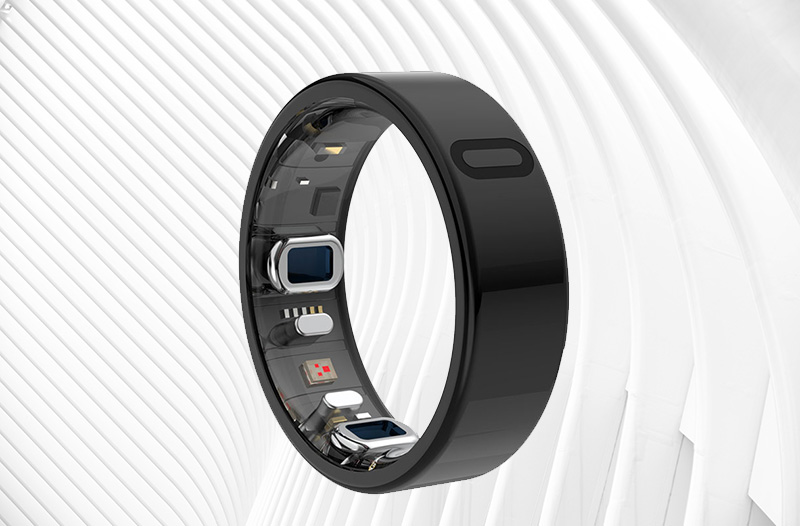
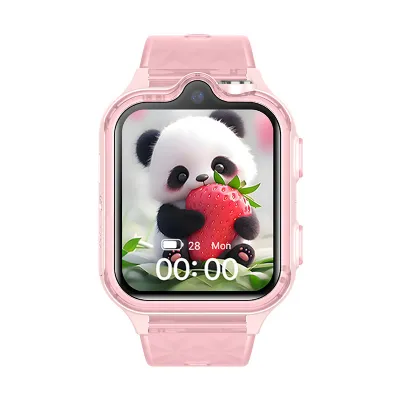
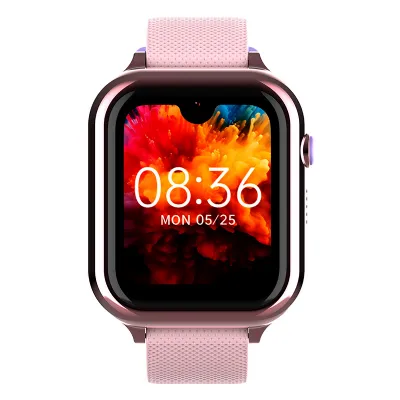
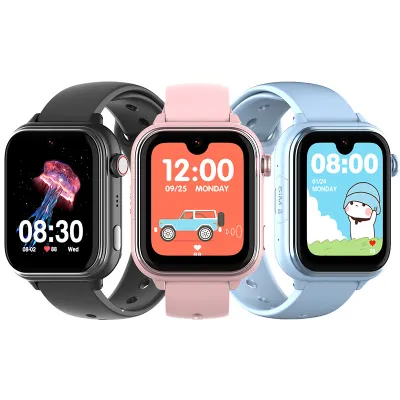
"The move to Nordic + TI provides a foundation for next-generation health wearables with improved precision and reliability that we couldn't achieve before." — Wonlex R&D Team.
Why Wonlex Adopted Dual-Chip Architecture for Health Wearables
Our previous MF91 ran on a 3228T chip. Don't get us wrong, it had the basics covered, such as ECG, HRV analysis, heart rate monitoring, and blood oxygen saturation tracking, making it a solid base for everyday health wearables.
Our latest design uses a dual-chip setup, dispersing the workflow between two dedicated chips. Think of it like having your phone's processor and Wi-Fi module separately. Nordic deals with the wireless communication end, including Bluetooth, while TI4950 handles all the biometric sensing and data collection.
Health wearables are all about multitasking to keep a rock-steady connection and collect tiny body signals from your wrist without skipping a beat. By letting each chip focus on one specific job, we can actually make both jobs better at the same time.
Key Strengths of the Legacy MF91 Platform
Before outlining the upgrade, it's important to understand what the MF91 platform already enabled. It formed the base for earlier health wearables, and you could get some real value out of it, including ECG, HRV analysis, and routine tracking.
The fact is, for many typical use cases, the MF91 was good enough. It helped us establish a recognition in the health wearable market and served up some solid products that did a good job of meeting user demands.
As more and more users expected better health insights, seamless all-day tracking, and richer app experiences, it became clear that we needed a major upgrade to keep up.
Where the MF91 Fell Short for Next-Gen Health Wearables
To start with, there was the signal quality issue that we want to improve. While the 3228T chip could handle ECG and HRV, it really struggled with precision when it came to capturing weak or complicated body signals.
The second limitation was the monitoring ability. The MF91 could track health data, but its continuous monitoring performance was limited. That can be a problem for use cases like overnight monitoring.
Thirdly, while the MF91 could do its thing and hand over processed data to your phone for syncing, it never really offered a ton of depth or flexibility for advanced analysis or future algorithm development. For our OEM customers, that meant they had less room to build on and less flexibility to add the premium features.
Nordic + TI4950: The Dual-Chip Engine Behind Next-Gen Health Wearables
We think the new Nordic + TI4950 design marks a real game-changer. It's an upgrade that goes all the way to the heart of the product, giving us cleaner signals, stronger monitoring, a more stable Bluetooth connection, and a base that's finally scalable for future products.
Rather than asking one platform to do everything, we've separated the wireless communication from the biometric sensing. Nordic focuses on low-power Bluetooth performance, while TI takes care of collecting high-precision health data with ease. For users, that means their device will be able to track things better, synchronize with other devices better, and support more actual, useful health features.
1. Smarter Biometric and HRV Tracking
We wanted to make some changes because the new chip lets us get a more accurate biometrics tracking. Biometric data is the data we obtain when measuring things about the body, such as heart rate, blood oxygen levels, and electrical signals from the heart (ECG). These are the core features that health wearables use to generate some useful insights.
Heart rate variability, or HRV, is the variation between one heartbeat and the next. The human heart rate always has inconsistent HRV, even for a healthy heart. That's why it's interesting to know your HRV. In medical professional, they use this data to help with recovery, stress, sleep quality, and everything that is going on with the nervous system.
HRV and ECG signals are super tricky to get with a smartwatch. The signals are tiny, and getting a good reading from the wrist is quite hard. That's where the quality of the chip comes in.
The TI4950 improves things in a few key areas. For a start, it's got incredibly low input noise. This sensor doesn't produce unwanted interferences while trying to collect the signals, resulting in cleaner readings.
The TI4950 also has a higher signal-to-noise ratio, which means they can hear and detect any useful body signal more clearly. This helps the device to show reliable readings even when the users are moving around or sleeping.
2. True 24-Hour Continuous Tracking
The other big change here is that the device will now be able to keep an eye on the health tracker continuously for 24 hours straight. A lot of health features only become really useful when the device can keep a steady eye on them for a long time.
The old platform we had supported health tracking, but its continuous monitoring was always going to be limited by power use and the capabilities of the chip itself. That made it harder to keep the readings steady for a long time.
The TI4950 changes all that by letting the wearable do continuous monitoring for 24 hours on key functions like heart rate, HRV, and blood oxygen tracking. This makes the device actually a lot more useful for tracking your sleep, your all-day activity, and generally monitoring your health over a longer period.
A device that can monitor for hour after hour will give users a far better insight and make it easier for OEM partners to release products that are way ahead of the game. The new platform is also way more resistant to light distraction, which is brilliant because it means users get their data even when they're sleeping.
3. Seamless Connectivity and Better Features
The third major upgrade is connectivity. We've replaced the old single-chip setup with a new dual-chip setup where Nordic handles Bluetooth and connectivity while TI handles all biometric readings.
The new platform also has a lot more features other than connectivity. Compared to the old MF91 platform, the new Nordic + TI device gives you 24-hour temperature monitoring, pressure monitoring, breathing training, push-to-talk (PTT), and 147 sports modes. It's more than just step counting and calorie calculations.
These features can stand out more in the market because they are built on a solid foundation. We have considered well the things we need. So we built a platform that can actually deliver and perform the features well.
What This Upgrade Means for Health Wearable Buyers
For Wonlex distributors and OEM/ODM partners, replacing the old MF91 with the new Nordic + TI is about giving our partners a solid base to build on for the future of
health wearables. This new architecture provides better signal quality, all-day health monitoring, and a more reliable Bluetooth connection for smartphone synchronization. This system is also easy to scale up for future development. This also means that our OEM/ODM clients can get a more solid base for customization, app integration, and long-term product roadmap planning.
FAQs About Wonlex Dual-Chip Upgrade
What is the MF91?
The MF91 is Wonlex's previous platform. It is based on the 3228T chip and can handle ECG, HRV analysis, heart rate monitoring, and blood oxygen tracking. It is good for basic to mid-range health wearables, but it has its limitations.
What is the 3228T chip?
The 3228T chip is the core of the old MF91 device; it handles the job well enough for basic use cases, but its signal precision and processing depth don't hold up against the demands of more advanced health monitoring.
What's the Nordic + TI dual-chip architecture?
It's our new and improved platform that splits the workload between two clever chips. Nordic takes care of all the wireless connectivity, like Bluetooth, while TI's TI4950 handles all the biometric sensing and health data collection.
Why did Wonlex replace MF91?
We replaced it because our products need to be upgraded. Its continuous monitoring capability was limited, and it left little room to add new features as health wearables grew in importance to our portfolio, which limited our ability to add new features in the future. As health wearables became more and more important to our portfolio, we need to have something way more capable.
Why is the TI4950 better for health monitoring?
The TI4950 is a better chip than what we were using before because it can collect biometric signals with less interference and higher precision, which is a massive improvement for ECG and HRV features. Plus, it gives us a stronger foundation for getting reliable health data.
Does the new platform improve Bluetooth, too?
Yes, in the new architecture, Nordic is handling Bluetooth while TI handles biometric sensing, and that helps the system run more smoothly with less interference.