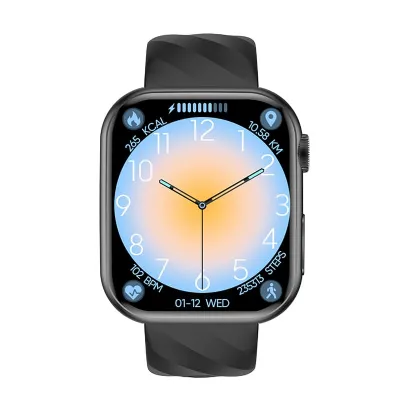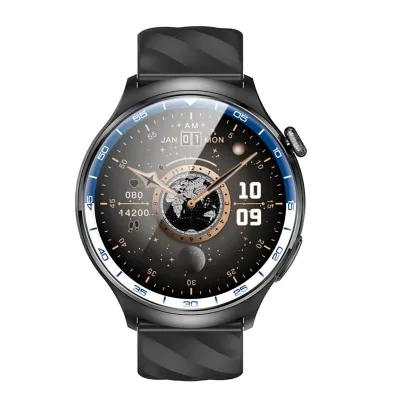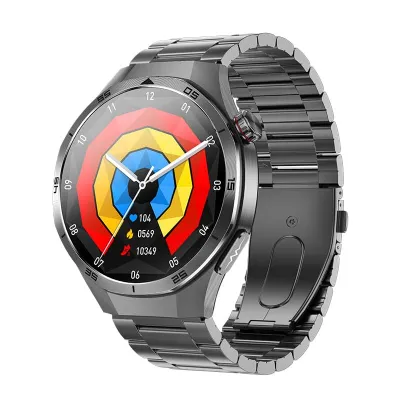
According to athletes and medical personnel, smartwatches are also helpful professionally. Edith Cowan, a university professor at Sophia Nimphius, stated that several professional athletes have added smartwatches to their equipment lists to maximize their performance.
Currently, 16% of Americans and 36% of Australians are smartwatch owners. Although these devices have specific medical applications, such as irregular heartbeats, their main market is for fitness and general health trackers.
The Internet of Things (IoT), which has been rapidly evolving in recent years, encourages consumers to use various information anytime and from any location. One part of the IoT is wearable technology, which includes smartwatches.
The history of the smartwatch began when it offered a pedometer. Now, people can rapidly access various physical and medicinal activities through smartwatches, as wearable technology is developing with great promise for improving health. According to Global Data projections, the wearable technology market was valued at approximately USD 23 billion in 2018 and is expected to reach USD 54 billion by 2023, increasing at a Compound Annual Growth Rate (CAGR) of 19%. Because of this, using this kind of technology in medical terms is more important than ever.
Adopting health smartwatches has been the primary focus of research in Malaysia, Korea, and Taiwan. Medical professionals, nurses, and patients tend to embrace user-friendly and beneficial technology. Important factors also contribute to health smartwatch adoption, such as content richness (timeliness, relevancy, and sufficiency of information) and user innovativeness (willingness to accept new technologies).
According to a study, smartwatches are widely used in the medical industry because of their practicality, rich content, ease of use, and inventive user base.
We recommend that hospitals expand the usage of wearable technology to support relevant applications across departments and improve adoption. Then, they should encourage patients to adopt smartphone-based applications on wearable smart devices for better health management.
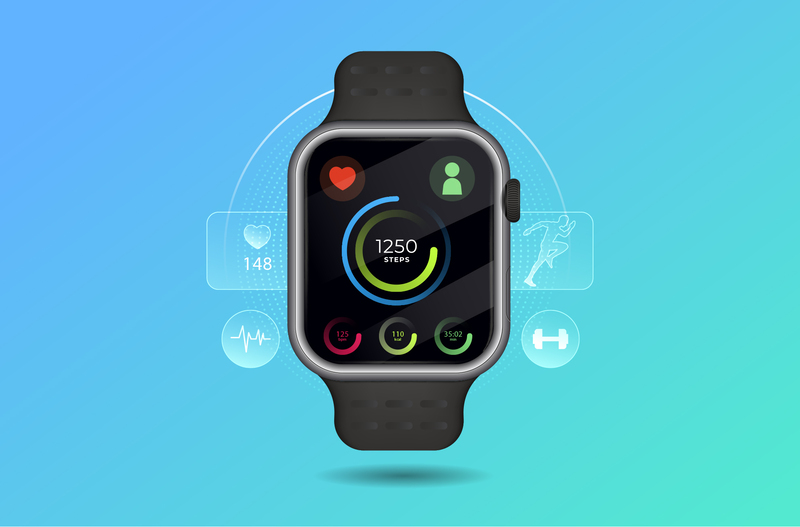
These days, we may gather physical and physiological health data via wearable smartwatches, transfer it online, and store it. A healthcare team with professional qualifications, a smartwatch maker, and a smartphone app should facilitate this approach. The result is a data service platform on smartwatches that allows for ongoing monitoring, assessment, and early warning of an individual's health.
People's work and rest patterns are shifting as the world gets faster and faster. Many people struggle with maintaining regular sleep patterns and being productive. To solve this, a gadget that can assist them in managing their schedule and ultimately improve their health is required.
The market for smartwatches in the mobile technology industry is increasing as wearable medical gadgets have developed by providing ECG capabilities. This technology makes real-time monitoring of heart health and other vital indicators possible, essential for the early identification and proactive treatment of illnesses such as atrial fibrillation (AF). It also tracks various personal health measurements and cardiovascular health markers in real-time.
Health smartwatches with integrated ECG app data could revolutionize patient care. AI might also be used to produce simple-to-read ECG summaries in EHRs.
Wonlex ECG Smartwatches are designed to record, store, and display ECG waveforms. With these health watches, users can monitor vital indicators including blood oxygen levels, heart rate, respiration rate, wrist temperature, and sleep duration.
With Wonlex's technology, users can better manage changes in their physical and mental health at any time.
The health app linked to their watch allows users to schedule reminders for health assessments and track the impacts of their workouts, including time and intensity, with post-workout effort ratings. The app has a summary page that can be customized to show particular data, such as running, hiking, swimming, and mindfulness training stats. As a result, users are encouraged to walk more, sit less, and work out every day.
The connected health app has elements that drive users to stay motivated and consistent. With the configurable and user-friendly Wonlex ECG Watches, customers can use one hand to navigate through any app, including calendars, messaging, and weather.
Wonlex ECG Watches combine health monitoring with smart connectivity. Integrated with the phone's health app, these watches provide continuous tracking across key health and fitness metrics.
Our professionals will carefully inspect every new smartwatch we manufacture to assess its comfort and design. We recognize that consumers won't wear it every day if it's not stylish and comfortable enough for anything from an early-morning workout to business hours to a night out. For us, it's important always to prioritize the user's experience. Since most smartwatches also function as fitness trackers, we constantly check that all sensors—including GPS, heart rate, and step counts—function properly.
We also evaluate battery life under practical scenarios, such as exercising, using applications, and receiving notifications, to ensure consumers can go the entire day without needing to charge.
Therefore, to ensure that low-income people have access to digital health technologies and to promote health equity, hospitals, health systems, insurers, tech businesses, and professional associations must work together to develop a functional yet affordable health smartwatch.