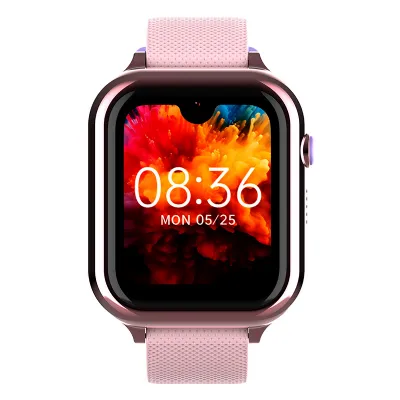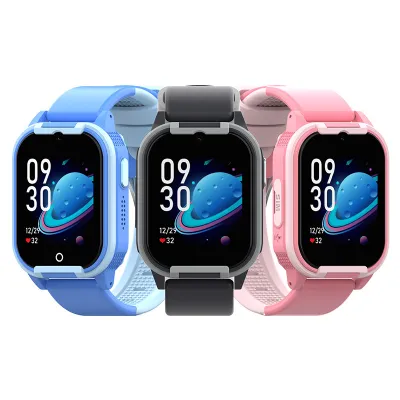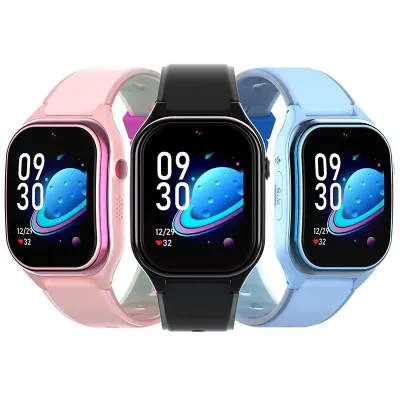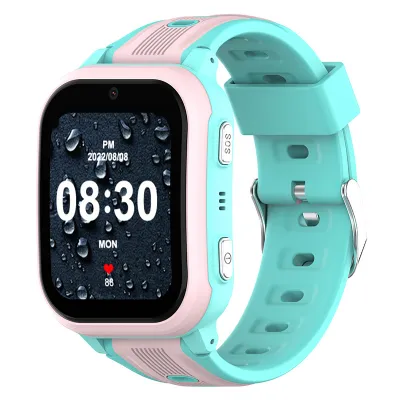
For distributors and importers, 2026 is a turning point. Today's parents want to be able to communicate with their child, track their health, and expect it all to be in a single wearable device that can withstand the daily wear and tear of a kid. At retail, it's those smartwatches that can do it all that are getting all the shelf space. The ones that only do one or two things aren't moving.
For wholesale buyers, the implication is clear: product selection now directly impacts sell-through performance and competitiveness. Choosing the right feature set is no longer optional, but essential. In this article, we break down 7 key kids GPS smartwatch features that are driving distributor sales in 2026.
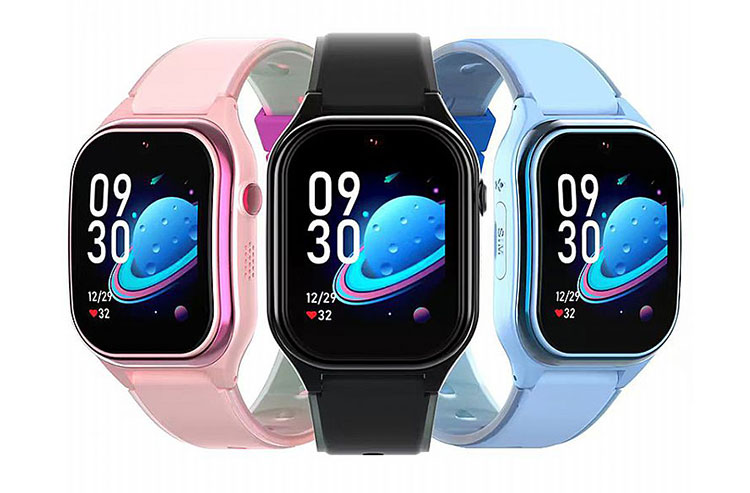
4G LTE is the foundation of any kids smartwatch. Without it, you're stuck with older GPS tech. If you're a distributor looking to stock up on kids GPS smartwatches, this is the first thing you should be checking on.
Distributing a product without 4G support typically results in higher return rates and negative reviews, both of which directly impact business performance. So when you're looking to stock up on a GPS smartwatch with 4G, check on a few key things: what bands will it work with in your target market (Band 4 and Band 12 for North America, for example), what type of SIM card it requires (Nano SIM is the current standard for most models) and what MVNOs it works with (since a lot of people sell SIMs to end users).
4G LTE support also makes high-res video calls a lot more appealing, and that's turned into a major selling point for some consumers. Lots of parents thinking about getting a GPS watch for their kids in 2026 are now expecting decent video call quality as part of the package. To top it off, 4G connectivity also lets the kids send instant messages and integrate their favourite apps, which makes the watch more useful and gets kids using it a lot more often.
Traditional GPS tracking is okay in open spaces with clear skies, but not indoors, in shopping malls, at school, or anywhere where the signal can't reach. So, for a GPS watch designed to work almost anywhere, a single GPS isn't enough.
But then there's quad-positioning, which combines GPS with several other useful features like Assisted GPS, Location-Based Services, and Wi-Fi triangulation. It does this by automatically switching to whatever method is most accurate, depending on where your kid is. So if they're indoors, it defaults to WiFi and LBS. If they're outside, GPS and AGPS kick in. The result is you get a pretty accurate reading of where your kid is, no matter where they go.
On top of that, having four positioning methods also makes it a lot easier to use the geo-fencing and safe zone alert features that parents love. First of all, accurate geo-fencing needs accurate positioning. A geo-fence alert that's based on wrong data is pretty useless. So by having quad-positioning built in, distributors are stocking products that actually deliver on the full feature set.
Health monitoring in kids' wearables has moved from 'novelty' to 'expected feature' in the blink of an eye. Parents who've made wearing fitness trackers a habit will naturally expect to see some kind of health monitoring on their kids' GPS watches. This is especially true for parents living in countries with a strong focus on health, such as the US, Germany, South Korea & Australia, where having some measure of their kids' physical condition is a major concern.
OEM buyers can even use it as a means to create different branded products. When looking for a GPS smartwatch for kids with health monitoring features, it's a good idea to check whether heart rate data is collected continuously or only on demand, whether the data is synced to a companion app where parents can view it, and whether other sensors (such as body temperature or blood oxygen) are included or planned for future updates.
One-button SOS emergency calling is the feature that converts hesitant parents into buyers. It's the only feature that directly addresses the core emotional reason behind most kids' GPS watch purchases: the fear that something might go wrong, and the child will be unreachable.
From a distributor's point of view, one-button SOS is actually pretty important for a couple of reasons beyond just being a great selling point for parents. Firstly, it's the main thing that sets a strong SOS feature apart from the competition in retail marketing. It's the big headline feature that makes people click on the online listings and gets noticed on the shelves.
Secondly, one-button SOS is actually becoming a regulatory standard in some markets. As governments start drawing up safety standards for kids' connected devices, the presence of a physical emergency function is getting looked at really closely. So if our distributors are building supply chains in places that have these kinds of regulations, then SOS is something they really need to be paying attention to.
B2B buyers should probably also be checking a few other things. Like how many pre-set contacts the device supports, whether the SOS alert actually includes the location data, whether it will work even when the phone is on do not disturb mode, and how they prevent false triggers from happening with that press and hold mechanism rather than just a single tap.
Kids are pretty rough on electronics. A product that can't survive a wash, a bit of rain, or a splash will be sending returns back to you, attracting bad reviews and upsetting the customers. IP67 waterproofing is the spec that helps to prevent all that.
IP67 is an internationally recognised way of measuring how good a product is at stopping dust getting in and how well it can cope with a splash of water. The '6' denotes that the product is completely dust-proof, and the '7' means it can handle being submerged in water for 30 minutes at a depth of one meter and still be okay. For a kid's wearable, that means it can go through the full range of what the kid will probably put it through, including getting caught in the rain on the way to school or getting splashed at the water fountain, and still be good to go.
When B2B buyers are looking to source GPS smartwatches for kids, they should be asking to see the actual documentation of IP67 testing from the manufacturer, not just a claim on a spec sheet. And that documentation better come with some serious third-party test results to back it up, especially if you're selling into places like the EU or North America, where compliance is everything.
Safe zone geo-fencing lets parents create a geo-fence in many places where the kids usually are, such as school, neighborhood block, or a grandparent’s house. When children wearing the watch enter or exit the zone, parents will have an instant notification. A kid who stays in the right zone at the right time gives the parent peace of mind without having to constantly keep an eye on things.
The most basic variants of geo-fencing are actually quite simple, just a single circular zone. But in more advanced versions, they can even be more customized (like "School", "Home", or "Grandma's") and also time rules on top (such as "only alert if the kid leaves the school zone between 8 AM and 3:30 PM ").
Having Artificial Intelligence on a kids' wearable gadget is the biggest leap forward in this category. When we talk about GPS smartwatches for kids and AI, what we're really talking about is a smart assistant that can get things done, including voice-activated queries, contextual alerts, and a self-changing interface.
Children who struggle to type on a small screen can just talk to the watch and get what they need. Parents can send reminders more naturally. The watch can bring up the time, weather, or any other important info, all without the kid having to navigate through menus.
For distributors and importers, AI integration is the one feature that really matters for the future. Products that are labeled as "AI powered" or "with AI assistance" are the first things people notice, and they get a lot of attention in online listings. They get higher click-through rates online, and they receive positive coverage in the media.
When comparing different GPS smartwatches, you need to consider how advanced their AI is. A watch that can understand natural language, give you relevant answers, and send you safety alerts is a lot different from one that can just set an alarm with voice. So when you are sourcing, you should ask for some demos of the AI, check what language it supports, etc.
The common mistake distributors make when sourcing connected devices for kids is placing big volume orders before checking the regulatory compliance paperwork. For a GPS smartwatch headed to the EU, for example, you need to get the CE marking, and that has to be for the specific product model, not just for the whole company. And in North America, you need FCC certification for anything that uses radio frequencies. And then there's the UKCA mark that's required for products going into the UK post Brexit. Rather than just asking for spec sheets, demand to see some test reports to show that the certifications are up to date.
If you want your brand to stand out in the market, you can explore the OEM and white label options that the manufacturers offer. This service lets you put your own brand and logo on the products. OEM can be a bit pricey and may mean you need to order a lot more units than you'd like to.
For a GPS smartwatch, the software and app are just as important as the watch itself. If the app crashes, shows the wrong map, or starts demanding a VPN just to work properly in certain places, then you've got to wonder to look for other suppliers.
Standard minimum order quantities (MOQs) usually start at around 50 to 500 units, but for custom or OEM orders, you can be looking at much higher MOQs. And then there's the mixed-SKU MOQs that you can negotiate to combine multiple product variants to meet a single MOQ threshold. It can help reduce your risk and keep things commercially viable for you and the supplier.
Getting a GPS smartwatch for kids from a manufacturer that has experience shipping to your specific market is a smart move. Look for one that's got all the necessary paperwork of customs documents, compliance records, and established relationships with freight companies. Manufacturers who've shipped to places like North America, Europe, or other tightly regulated markets will already have the right origin documents and compliance certificates ready to go. This saves you a bunch of hassle down the line with clearance delays and getting shut down by customs.
A: Get some sample units and do some field testing indoors and outdoors. Then compare the results. A good quad-positioning system should be able to pinpoint you to within 5-15 meters outside and give you a good idea of where you are inside a building.
Q: What's a realistic MOQ for a private label or OEM kids GPS smartwatch?
A: MOQ requirements for OEM or white-label tend to differ from one manufacturer to another, but typically in around 500 units per model when you're looking at custom software or branding. It can also be in a minimum of 1000+ units if you're after custom hardware modifications like case colours, strap designs, or a custom logo. Some manufacturers are a fair bit more flexible and might be willing to let you get started with as few as 200-300 units.
Q: What kind of support can I expect to get from a GPS smartwatch manufacturer?
A: A reputable manufacturer will, at the very least, throw in a 12-month warranty against manufacturing defects and some basic documentation that explains the returns and replacement process. They will also have some agents or representatives available when there are problems with their products and their software.